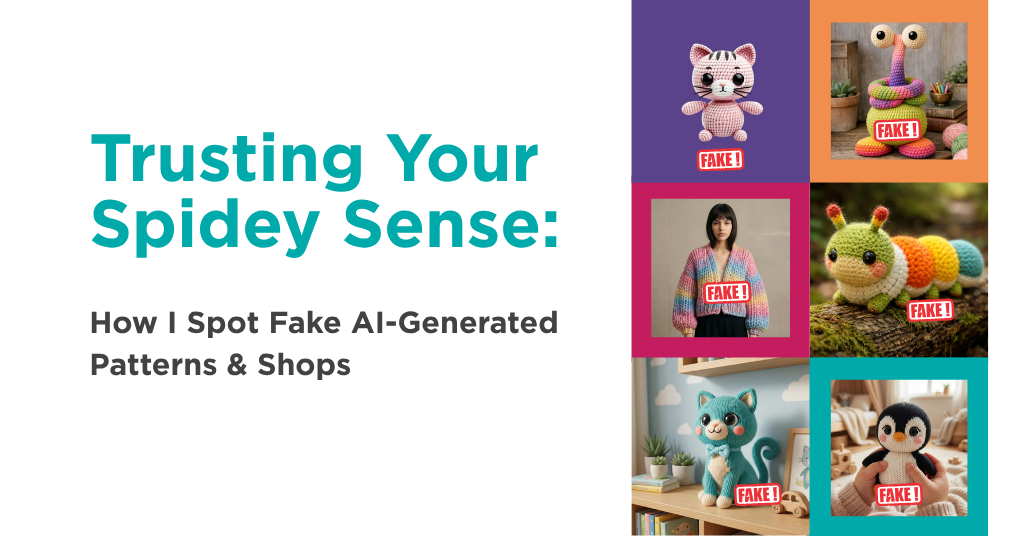
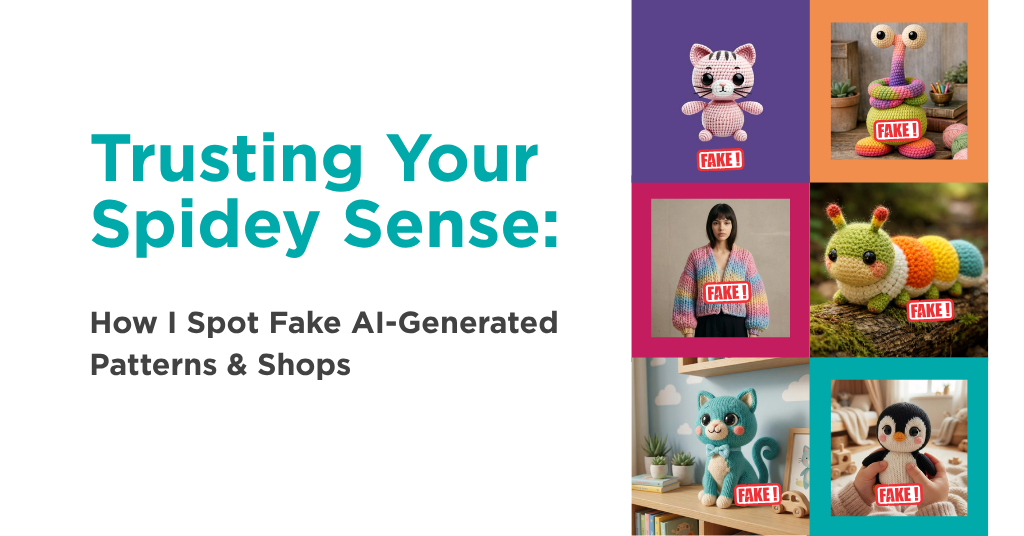
Every day it seems that the coordinated network of fraudulent pattern shops gets bigger and more pervasive. I know a lot of knitters and crocheters are hesitant to even buy patterns anymore because of how hard it can be to spot fake AI-generated patterns. This is hurting a lot of small business owners, folks like me and all the designers that I support.
One of my newsletter subscribers asked me something recently that I think a lot of us are wondering: how do you actually tell if a pattern is the real thing?
Here’s my tried and true check-list:
✔️ How long has the designer been around? Under a year? Beware and vet more rigorously.
✔️ What are their pattern reviews like? This one’s tricky because there’s a network that works together to leave effusivse (fake) reviews. Look for generic writing, no profile pic, and multiple reviews from the same person. Often you’ll see real one-star reviews paired with seller replies that blame the buyer’s lack of skill, etc. If your spidey sense is tingling, trust it – that’s almost certainly unconcious pattern recognition.
✔️ Does the seller have any status? (Etsy Pick or Star Seller, for example) If so, that’s a good sign their designs are good.
✔️ Can you find examples of the pattern being made by someone other than the designer? Check Etsy listing reviews for project photos and Ravelry project pages too.
✔️ Do the stitches look perfectly square or not really knit or crochet? This is a tell-tale sign, a big red flag the pattern is AI-generated.
✔️ Does the designer’s style look inconsistent across their shop? This is also a red flag.
✔️ Does each project look impossibly perfect? AI photos often have this dreamy, almost too-perfect look – soft focus, flawless skin, lighting that’s a little too even. Everything looks beautiful but somehow … off. Again, trust your spidey sense.
✔️ Is it part of a pattern bundle? Pattern bundles that seem too good to be true – ie, hundreds of patterns for a low price – are usually bundles of AI slop or stolen patterns. Stay away! (reader tip)
✔️ Does the pattern remind you of one you’re seen before? AI patterns often reference popular patterns that you’ve seen before, this is especially true in the case of amigurumi patterns. The example below is almost certainly derived from a retro collection of vintage bird patterns.
✔️ Are the instructions too short? Some amigurumi patterns can be 10-40 pages, even longer, depending on the design. If this pattern looks like it may be too short for the complexity of the design, it’s probably AI. (reader tip)
✔️ Are you buying from a trusted source like Ravelry, where the community is 100% committed to fighting AI, and the platform offers real community-based solutions like volunteer editors who are also knitters and crocheters themselves. (reader tip)
Let’s look more closely at this example together:
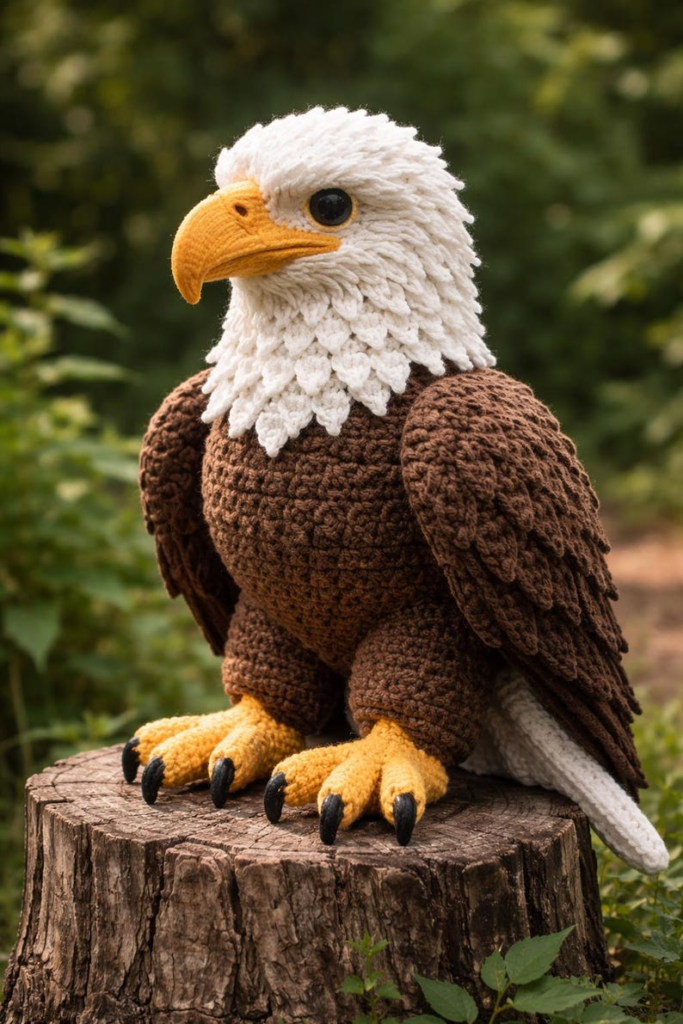
Based on my checklist, can you see why this is pattern is 100% AI-generated? The stitches look almost plastic – way too uniform, too perfect. The photography is cliché and has that dreamy, soft-focus glow with lighting that doesn’t quite match the real world. And c’mon, no real yarn project ever looks like this – the beak alone is a dead giveaway.
But the picture only conveys half the story. The shop this eagle came from (StudioMarry) is less than three months old, the five-star reviews are suspiciously enthusiastic with no project photos, and the actual pattern is reported to be six pages of vague instructions in multiple languages. Classic signs.
The one-star reviews are written by real people and say things like, “Complete AI-generated scam, no details whatsoever.” Trust the one-star reviews.
Real designers – the ones losing sleep over stitch counts, the ones whose bills depend on their patterns and shops being trusted – need us to shop smart right now. Report the shops selling fake patterns – let’s get the gatekeepers to do something about this! Bookmark this post, share it with a crafty friend, and again, trust your spidey sense. It’s usually right.
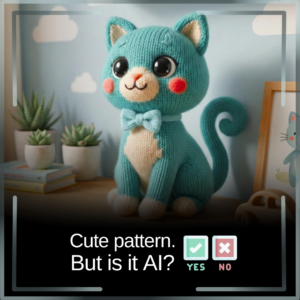
P.S. If you came here from the homepage, yes – the cat pattern is fake.
Post last updated July 19, 2026. Email me if you have a tip and I’ll add it to this post.