
As more and more people begin to take on knitting, it is becoming increasingly evident that this is an ideal hobby for people of all ages and even genders. If there is anything that every knitter has in common, it is the fact that they were all beginners at some point. It does not matter what age you are; you are never too old or too young to start your knitting journey. Have you admired some creative knitting work and wished you could produce the same? Are you harboring a desire to take on knitting but not sure how or where to start? Then the following knitting tips for beginners are just what you need to know.
1. Purchase cheap and plain yarn
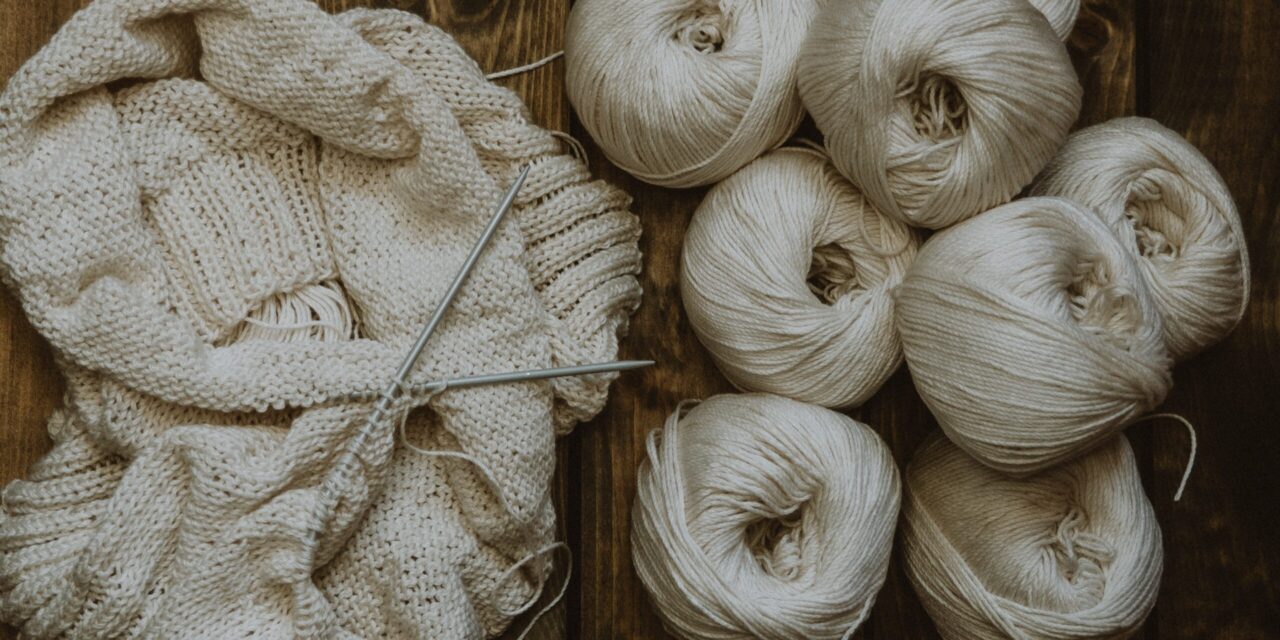
There is no need to go looking for the most sophisticated yarn out there as a beginner. It is very easy to be tempted by all the soft, unique, and pretty yarns currently available on the market, but the truth is that your first couple of knitting attempts are not going to be worth using those lovely yarns. Plus, purchasing a cheap, plain yarn is very gentle on your pocket, and will not leave you pulling your hair out if you waste it. Therefore, set off with the cheapest and plain yarn you can find to practice with. As you get better, you can opt for the more expensive ones.
2. Purchase your needles strategically
Unlike your yarns, your knitting needles should last you a lifetime – or at least, a very long time. Right from the onset, you need to look for needles that are not only of good quality but are also sturdy and fit comfortably in your hand. If you have access to any store that sells needles, then you can ask to hold a few of them in your hand to test how they feel before deciding on which brand feels comfortable. If you would like to make the purchase online, then you should opt for size eight bamboo needles, single-pointed. This needle type is a more comfortable place to start from.
3. Learn to knit continental style first
There are typically five knitting styles that you can learn. But all these styles or techniques can be divided into main styles – the continental and the English style. The English style comes with its approach in terms of how you hold the knitting needle and work out each stitch. The continental style also comes with a different holding technique that is quite similar to crocheting techniques.
It is advisable to learn to knit the continental style first because it is faster and even easier on your joints. Since you are a beginner, you should expect some joint pains. The continental style helps your joints get used to the process with much less discomfort than the English style. You can learn the latter technique at your convenience and when you are conversant with the continental style.
4. Learn to knit cast-on
Most instructors start by teaching how to cast on with the long tail cast-on method. This method is trendy, and it is recommended that you learn it before anything else. However, if you find this method more confusing and frustrating, it is best to learn the knit cast-on technique instead. This method is beneficial when beginning your knitting journey and is much simpler to understand. This method also teaches you how to complete a knit stitch in one and how to cast.
5. Begin with a swatch
Now that you have your needles and yarn, you may also be harboring a grand idea of the first scarf you want to knit. But hold your horses first; before you jump onto bigger things, you need to first try your hands on the smaller and less complicated stuff. Knitting up a gauge swatch, for example, is a perfect place to start. The idea is to help you learn how to cast on and knit. So, start small, and knit up a small square of fabric first. See how it goes and how your fingers feel. This way, you will be better equipped to address knitting issues as and when they show up, without worrying about ruining a beautiful scarf or a gift to a friend.
6. Ignore your tension
Knitting tension is entirely normal, even for seasoned knitters. However, the last thing you want to do is to allow it to get to you. Knitting tension can cause your rows to be so uneven that you will seem to be knitting at the edges. But no matter how horrible your fabric or swatch looks, do not allow it to get to you. With time, you will grow out of this. Continue knitting through your tension until your stitches start to even up while working on your swatch continuously. In short, keep practicing.
7. Use some basic math
You may not be expecting the mention of maths on this subject, but using some basic maths will come in handy. Keep in mind how many stitches you can cast with. Every row you knit for the first thirty or so rows, count the number of loops on your needle when you have finished up. If it looks like you have lost or gained a stitch, then something went wrong at some point. But this is entirely normal, and there is no need to panic. However, if you find yourself struggling with the math or encounter difficulties in tracking your progress, you can always seek help to “do my matlab assignment” to assist you in managing the calculations and ensuring your knitting project turns out just right. Again, mistakes like these are part of why you need to start small to learn and correct your errors as you go. As you get better at knitting, you should be able to identify such mistakes and fix them in a way that makes it look like you never made a mistake in the first place.
8. Video tutorials are your best friend
Whether you are attending knitting class, have a personal tutor, or learning on your own, video tutorials are your best friend. Fortunately, there is a wide range of online videos, materials, and lessons to guide you each step of the way. Only make sure that you use a combination of materials every time – both videos and written. But if you have to choose only one form of training materials, choose video tutorials. Written lessons are very limited in the way they can help you to understand the knitting techniques. Even the ones that come with pictures are mostly inadequate in terms of content. Doing this will only lead to a prolonged learning process for a beginner. Video tutorials, on the other hand, are more practical; you get to see a visual display of your lessons, and this promotes a faster learning process.
9. Disability does not mean “inability”
Learning to knit is for everybody inspired to take on the challenge. Therefore, it matters very little how physically challenged you are, as all you need is a little inspiration. Depending on the physical challenges you may be living with, you can search online for available support workshops in your area. If you feel that your vision is not the best to enable you to take up knitting as a hobby, you can simply pick out a pair of eyeglasses or purchase new ones. Ensure that you check the reviews to be sure that you are buying the right and useful product. The point here is that you should not give up on your dream, love, or passion because of your disability – at least, not until you have given it a try first. Remember that disability does not always mean inability, so have the courage to take the bull by the horns and engage in making new creations while knitting.
* This post contains sponsored content.